

History of the EPA
Below we serve up glimpses of EPA's history in five different "flavors":
Oral History Videos
Alumni have recorded videos on a variety of subjects. Most videos are 45 to 60 minutes in length but are broken down into chapters for easier viewing. Transcripts and podcast versions of these videos are also provided. HERE ARE SOME SUGGESTIONS TO PEEK YOUR INTEREST
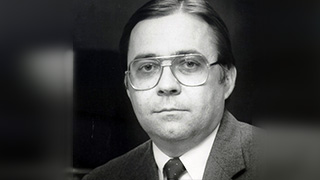
Interview with Lee Thomas, EPA's 6th Administrator
Lee Thomas, EPA's 6th Administrator, served during one of the most critical periods in the agency's history A member of the Ruckelshaus "save EPA" management team, Thomas discusses his service as OSWER AA and then as successor to Ruckelshaus as Administrator. He talks at length about the issues that marked his tenure, including Chernobyl, Superfund reauthorization, Stratospheric Ozone, and Climate Change. In explaining his core values and management style, Lee offers encouragement to current EPA employees.

Chapter 2: How EPA was Created using Reorganization Plan #3
(10 minutes) From Behind the Scenes at the Creation of EPA in 1970Chuck Elkins tells why certain programs were chosen to be moved to the new Agency and why others were left behind.
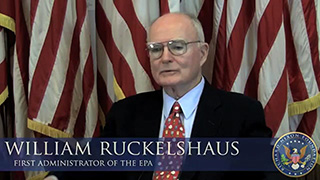
Chapter 2: Setting up the New Agency's Structure
(17 minutes) From Bill Ruckelshaus and some of his closest aides recall the Opening Months of the New Agency in 1970Bill Ruckelshaus and three former assistants talk about finding the right appointees for the agency, meetings in the regions to get them up and running, Doug Costle's role in creating the agenc...

Chapter 5: Lessons Learned
(23 minutes) From Early Implementation of the Clean Air Act of 1970 in CaliforniaPerhaps the most important result from these various "stories" about how EPA was implementing the 1970 CAA were the "lessons learned" which are discussed in the final chapter by...

Chapter 3: Implementation (Standards, Regions, and States)
(18 minutes) From Early Implementation of the Safe Drinking Water ActHalf Century of Environmental Progress
High school and college students as well as others may not know about the major environmental problems and issues encountered in the United States in the latter half of the 20th century, how they were addressed, and the importance of continued vigilance in attacking remaining and evolving issues. This history of EPA has been written for them."
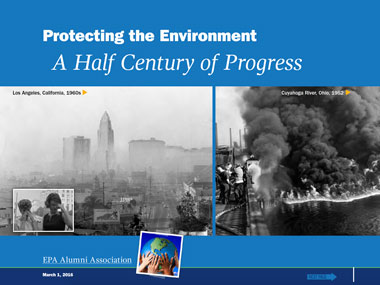
Half Century of Progress: Overview
From Half Century of Progress: OverviewCategories: Air: General, Air: Mobile, Air: Stationary, Enforcement, International, Pesticides, Regions, Solid Waste, States, Superfund, Toxics, Water: General
EPA Journals
For many years, EPA published the "EPA Journal" with interesting articles on a very wide variety of topics. The Association is slowly digitizing and categorizing these Journals. To date we have digitized 3034 articles. HERE ARE SOME SUGGECTED ARTICLES FOR YOU TO SAMPLE

Enforcement Drive Mounts by Tom Kelley
From Searching for Environmental Safety, Nov. 1983Categories: Enforcement, RCRA
Weighing the Benefits of Clean-up Rules Against Their Costs by Ralph A. Luken
From EPA: A Regulatory Agency, Mar. 1988Categories: Economic Impact, Management of Agency, OMB, Policy and Planning

Why Our Wetlands Are Vanishing
From Why Our Wetlands Are Vanishing, Jan. 1977Categories: Water: Wetlands

Issues in Toxics Control: An Interview with Don R. Clay
From Reducing Risks from Toxic Substances, Jun. 1985Categories: Management of Agency, Toxics
Books & Articles by Alumni
Some of the most detailed history of EPA is contained in books and articles written by alumni.
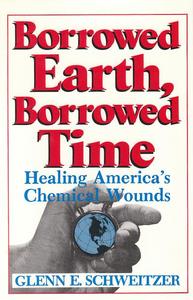
Index (for detailed searching)
From Borrowed Earth, Borrowed Time: Healing America's Chemical Wounds by Glenn E. SchweitzerCategories: Toxics
Chapter 3. The Uncertainty of Risk but the Reality of Cost
From Borrowed Earth, Borrowed Time: Healing America's Chemical Wounds by Glenn E. SchweitzerCategories: Toxics
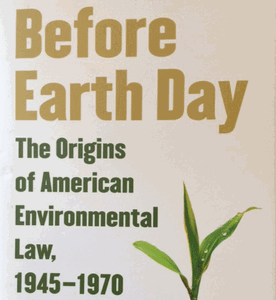
Before Earth Day: The Origins of American Environmental Law, 1945-1970 by Karl Brooks
From Before Earth Day: The Origins of American Environmental Law, 1945-1970 by Karl Brooks
Chapter 8. Exceeding the Absorptive Limits of the Global Commons
From Borrowed Earth, Borrowed Time: Healing America's Chemical Wounds by Glenn E. SchweitzerCategories: Toxics
Historical Documents
Some documents have made a big difference in the direction that EPA has taken through the years. Here we present some of them.
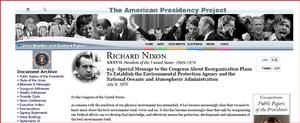
Creation of EPA: Message to Congress
From Creation of EPA: Message to Congress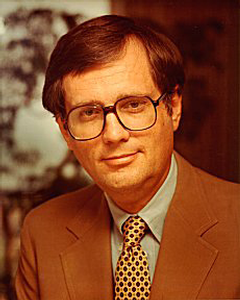
Interview with Alvin Alm in 1993
From Interview of Alvin Alm January 1994Categories: Congress, Economic Impact, Enforcement, Management of Agency, OMB, Other Federal Agencies
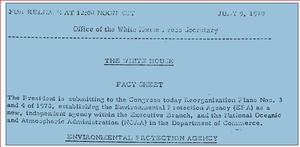
White House Fact Sheet re Creation of EPA
From White House Fact Sheet re Creation of EPA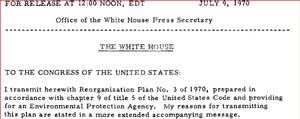
Reorganization Plan that Created EPA
From Reorganization Plan that Created EPASearch all history files.
SEARCH BY WORD
SEARCH BY CATEGORY
Headline Media, Bob Bell (Developer), Nicole Lane (Developer), and Chuck Elkins & Barry Gilbert (Members)